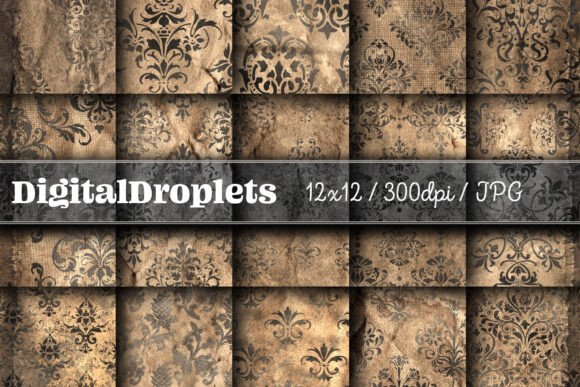
Timeless Patterns: Using Vintage Damask Scrapbook Vol. 1
There’s a specific feeling you get when you open a box of old letters or find a stack of postcards from a century ago. It’s the weight of the paper, the soft imperfections, and the intricate patterns that feel both luxurious and worn. Recreating that feeling digitally used to be a complex task of layering textures and patterns, but resources like Vintage Damask Scrapbook Vol. 1 streamline the process for designers, crafters, and brand strategists looking to inject a dose of historical elegance into their work.
This isn't just another digital paper pack; it is a curated collection of 20 high-resolution 12x12 JPEGs. At its core, the set features classic damask patterns—those symmetrical, often floral-inspired motifs that have adorned European textiles and wallpapers for centuries. However, what makes this collection practical for modern projects is the textural foundation. These aren't sterile, vector-perfect patterns. They are overlaid on old paper textures, giving the files a gritty, authentic history. The inclusion of a "shuffled papers" border adds a layer of dimensional realism, simulating the look of stacked paper edges, which is particularly useful for junk journal layouts and digital collages where depth is key.
Why Texture Matters in Brand Identity
As someone who has spent years helping brands find their voice, I often see businesses struggle with the "coldness" of digital design. Everything is too sharp, too clean, and too perfect. While minimalism has its place, it can sometimes lack warmth. This is where Vintage Damask Scrapbook Vol. 1 becomes a strategic asset. By incorporating these textures into your background design or marketing collateral, you are signaling a specific set of values: timelessness, attention to detail, and heritage.
Think about the industries where this aesthetic thrives. If you are designing a logo or brand identity for a boutique hotel, a high-end tea brand, or a bespoke tailor, a generic sans serif font paired with a flat background might miss the mark. Instead, using a textured background from this collection as a canvas allows your typography to pop. Imagine a sharp, modern serif typeface sitting on top of one of these aged, patterned pages. The contrast between the clean typography and the rough texture creates visual hierarchy that commands attention without shouting.
Moreover, for content creators and marketers, consistency is king. You need assets that can transition from a blog header to an Instagram post to a printed pamphlet without losing quality. Because these files are 300dpi and 12x12 inches, they are versatile. You can crop them for social media graphics, use them as backgrounds for quotes, or print them out for physical mood boards. The "shuffled paper" border mentioned in the product description is a subtle but brilliant detail—it grounds the design, making the viewer feel like they are looking at a physical object rather than a flat screen.
Practical Applications for Designers and Crafters
When you download a set like Vintage Damask Scrapbook Vol. 1, you are essentially buying a toolkit for visual storytelling. The applications extend far beyond traditional scrapbooking, though that is certainly where the heart of the product lies. For digital scrapbookers, these papers provide an instant backdrop that evokes the Victorian or Edwardian eras. They are perfect for framing family photos, creating heritage albums, or designing wedding invitations that require a classic, romantic touch.
However, let’s look at how entrepreneurs and small business owners can leverage these assets:
- Packaging Design: If you sell physical goods, consider using these patterns as a wrap for boxes or as a background for sticker labels. A vintage damask pattern can elevate a simple candle or soap box into a premium product.
- Editorial Design: For indie publishers or zine creators, these textures work wonderfully as chapter title pages or as a background for pull quotes. The texture ensures that text placed on top (in a contrasting color) remains legible while adding character to the layout.
- Digital Products: If you create digital planners or printable wall art, these papers serve as excellent foundational layers. You can overlay them with translucent shapes to create "washi tape" strips or use them to create digital envelopes and tags.
- Web Design: While you have to be careful with load times, using a cropped section of these papers as a hero image background can give a website a boutique feel. It works exceptionally well for "About Me" pages or artist portfolios where personality is as important as the work itself.
Working with the Files: A Practical Guide
Receiving a set of 20 papers can feel overwhelming if you aren't sure where to start. My advice is to view Vintage Damask Scrapbook Vol. 1 not just as a background, but as a texture element that can be manipulated. Here are a few tips for integrating these assets into your workflow effectively:
Color Grading and Blending: Don't feel locked into the original color palette of the papers. If your brand colors are navy and gold, use your photo editing software (like Photoshop or Canva) to adjust the hue and saturation of the paper. You can also use blending modes like "Multiply" or "Overlay" to merge the damask pattern with a solid brand color, creating a custom texture that is unique to your project.
Layering for Depth: The "shuffled papers" border is a great asset, but you can enhance the realism by layering. Place one paper down, then place a torn edge of a different paper on top of it. Add a drop shadow. This technique creates a physical, tactile look that is essential for junk journal aesthetics and collage art. It tricks the eye into seeing depth and weight.
Typography Pairing: This is crucial. Because the damask pattern is intricate and the paper texture is busy, you need to be mindful of your font choices. Avoid highly decorative script fonts or handwritten fonts for large blocks of text, as they will get lost in the pattern. Instead, use a clean, bold sans serif font for headlines or a sturdy serif font for body text. If you do want to use a script font for a title, place it inside a solid shape—like a banner or a text box with a semi-transparent background—to ensure it remains legible against the vintage texture.
Commercial Usage: For those using these for client work or selling finished products, always double-check the licensing terms provided by the shop. Typically, digital assets like these allow for commercial use in end-products (like a printed invitation or a flattened JPG image), but they usually restrict the redistribution of the source files. This means you can use the paper to design a wedding suite for a client, but you cannot sell the paper pack itself to someone else.
The "Vol. 1" Advantage
The designation "Vol. 1" suggests that this is the beginning of a larger journey. For creative professionals, building a library of textures is a long-term investment. Trends in design come and go—flat design, glassmorphism, neumorphism—but texture remains a constant tool for adding humanity to digital work. Having a reliable set of vintage textures ensures you are always prepared for a project that calls for warmth and history.
Furthermore, the mention of "other variations" and "sample freebies" in the shop description is worth exploring. Building a relationship with asset creators is smart business. If you like the quality of the Vintage Damask Scrapbook Vol. 1, exploring their other collections ensures visual consistency across different projects. Perhaps you need a set that is more floral, or one that is more grunge. Sticking to the same creator often ensures that the color grading and resolution standards are consistent, saving you time in post-production.
Ultimately, Vintage Damask Scrapbook Vol. 1 is more than just a set of JPEGs. It is a bridge between the digital and the physical. It allows a graphic designer in a modern office to create a piece of art that feels like it was found in an antique shop. Whether you are a hobbyist preserving memories or a brand strategist crafting a high-end visual identity, these textures provide the foundation for work that is rich, engaging, and timeless.